5 Things to See and Do in Lloret de Mar: Much More Than a Beach Town on the Costa Brava for the Ryder Cup 2031

Lloret de Mar hides a side that many visitors never discover: dreamlike gardens, medieval castles, hidden coves and a historic heritage that surprises anyone who dares to explore beyond the beach.

Lloret de Mar is the best-known town on the Costa Brava and one of the most visited tourist destinations on the Mediterranean. But there is a Lloret that goes far beyond its lively beaches and nightlife. A Lloret of wild clifftops, historic gardens recognised across Europe, sea-view castles and an Indian cultural legacy that has left a unique mark on its architecture and identity.

Just 30 minutes from Camiral, the official venue for the Ryder Cup 2031, Lloret de Mar is a must-stop for any visitor coming to enjoy the greatest golf event in the world on the Costa Brava. If you are planning your trip to the tournament, set aside a morning or afternoon to discover this corner of the coast that few people truly know.

Here are the 5 essential things to see and do in Lloret de Mar.

1. Santa Clotilde Gardens: The Most Spectacular Garden on the Costa Brava

If we had to choose just one visit in Lloret de Mar, it would be this one. The Santa Clotilde Gardens are one of the most important historic Mediterranean gardens in Europe, internationally recognised for their Italian-inspired Renaissance design and their absolutely breathtaking views over the sea.

Perched on a clifftop, the gardens were created in 1919 by the Marquis of Roviralta following the canons of classic Italian garden design. Monumental staircases, fountains, ponds and mythological sculptures intertwine with lush Mediterranean vegetation — pine trees, cypress, lime trees and white poplars that create an atmosphere of calm that is hard to find on the Costa Brava at peak season.

What many people don’t know is that the Santa Clotilde Gardens recently gained international fame after appearing in the series House of the Dragon, the prequel to Game of Thrones. A cinematic setting you can visit with your own two feet.

  • Price: approximately €6 general admission
  • Tip: visit first thing in the morning to enjoy them at your own pace before the tour groups arrive
  • Essential: bring a camera — every corner is a postcard

2. Sant Joan Castle and the Dona Marinera Viewpoint: History and Mediterranean Views

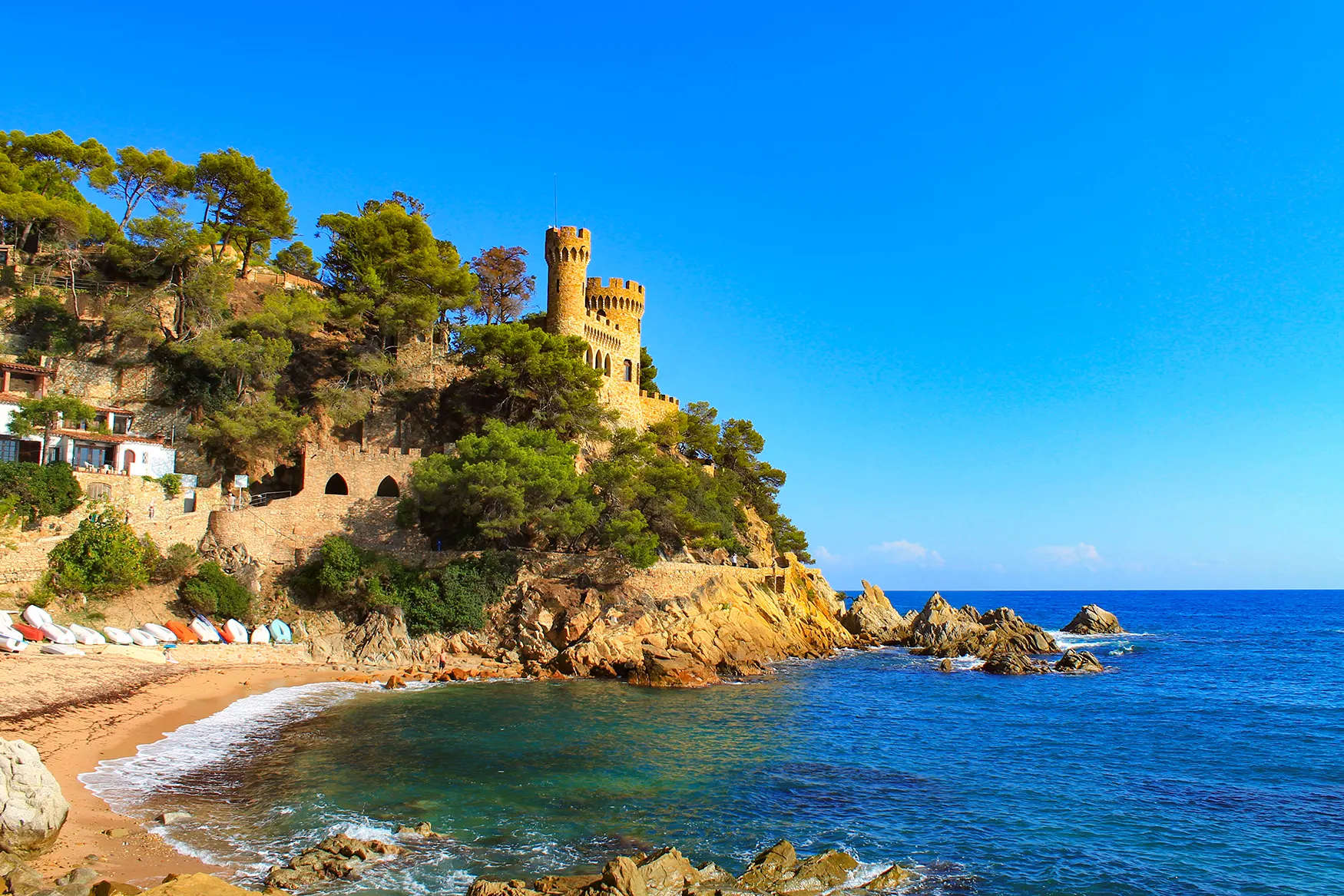
Atop a hill commanding the entire bay of Lloret, Sant Joan Castle is one of the best panoramic viewpoints on the entire Costa Brava. Although little remains of the original medieval castle — it was destroyed in the 19th century — the site offers a privileged perspective over the coastline that is simply priceless.

On the way to the castle or on the walk back, don’t miss the Dona Marinera Viewpoint, an absolute icon of Lloret de Mar. The 2.40-metre bronze sculpture, created by Catalan sculptor Ernest Maragall, depicts a female figure gazing out to the horizon — an eternal tribute to the women who waited for the return of sailors. A symbol that connects directly with the seafaring soul of this town.

  • How to get there: on foot along the seafront promenade or via the Camino de Ronda
  • Castle price: approximately €3
  • Best time: at sunset, when the light over the Mediterranean is absolutely magical

3. Cala Sa Boadella: The Wildest and Most Secret Beach in Lloret

While the main beach of Lloret draws thousands of bathers every summer, just a few minutes away lies a completely different world: Cala Sa Boadella. A wild beach surrounded by a pine forest that reaches all the way down to the sand, with a peaceful atmosphere and waters of an intense blue that rival the most famous coves on the Costa Brava.

To get there you have to walk through the pine woods — which ensures that only those who really seek it out ever find it. The result is an uncrowded beach with perfect waters for snorkelling and a protected natural setting that recalls what the Costa Brava was like before mass tourism arrived.

An experience that any Ryder Cup 2031 visitor coming to the Costa Brava should include in their itinerary, even if only for a morning.

  • How to get there: on foot from the Santa Clotilde Gardens (10-15 minutes) or from the Sa Boadella car park
  • Tip: bring a snorkel — the underwater scenery is spectacular
  • Best time: May-June or September, when it is far less crowded

Lloret de Mar has two faces: the sun-and-party destination that everyone knows, and a town with centuries of seafaring history, gardens recognised across Europe and unspoilt coves that jealously guard their secret. In 2031, when the Ryder Cup brings the whole world to the Costa Brava, those who venture to discover this second Lloret will find one of the most authentic corners of the entire Mediterranean.

4. The Camino de Ronda: The Most Stunning Coastal Path on the Southern Costa Brava

The Camino de Ronda is without doubt one of the most authentic experiences you can have on the Costa Brava. This historic coastal path — originally created so that customs officers could patrol the coastline — winds along clifftops, hidden coves and pine forests with Mediterranean views that simply take your breath away.

From Lloret de Mar the Camino de Ronda stretches in two directions: towards Blanes to the south (12 km through pine trees with stops at the Ermita de Santa Cristina) and towards Tossa de Mar to the north, where the path becomes even wilder and more spectacular. There is no need to walk the full route — even a 2-3 km stretch from Lloret is completely worth it.

For golf fans coming to the Ryder Cup 2031 who are looking for an active activity between tournament sessions, the Camino de Ronda is the perfect option: nature, exercise and world-class Mediterranean scenery.

  • Recommended distance: 3-5 km from Lloret in either direction
  • Difficulty: low to moderate, suitable for the whole family
  • Tip: wear comfortable shoes and bring water — the summer sun is intense

5. The Indian Legacy: The Modernist Trail That Changed Lloret Forever

Few people know that Lloret de Mar has one of the most interesting Modernist heritages in Catalonia, thanks to the so-called indianos — Catalan emigrants who left for the Americas in the 19th century, made their fortunes and returned to their home town to build mansions and buildings that still transform the urban landscape today.

The Route of the Americans takes you through the most representative buildings of this legacy: Can Garriga, which houses the Museum of the Sea with its collection of naval models and the maritime history of Lloret; Can Font, another Modernist gem on the seafront promenade; and the Passeig de Jacint Verdaguer, financed by an indiano and a symbol of the splendour of that era.

The Museum of the Sea is especially recommended for understanding the deep history of this town that today receives millions of tourists but which a century and a half ago lived from fishing and transatlantic trade. A culturally rich visit that complements perfectly the overall Costa Brava experience.

    • Museum of the Sea price: €4
    • Full route duration: 2-3 hours on foot through the town centre
    • Tip: combine it with the seafront promenade and the Dona Marinera viewpoint for a perfect morning

Lloret de Mar and the Ryder Cup 2031: The Gateway to the Costa Brava

Lloret de Mar is not only the most visited town on the Costa Brava — it is also one of the easiest entry points to the region that will host the Ryder Cup 2031. Just 30 minutes from Camiral via the C-65, well connected to Barcelona and Girona, and with an extensive hotel offering to suit every budget, Lloret can be the perfect base for tournament visitors who want to combine world-class golf with an authentic Mediterranean experience.

Because the Ryder Cup 2031 will not just be a golf tournament — it will be an entire week of experiencing the Costa Brava at its very best. And Lloret de Mar, with everything we have discovered in this article, has a great deal to offer that experience.

Want to stay up to date with everything related to the Ryder Cup 2031 on the Costa Brava? Follow our blog and don’t miss a thing.

5 Things to See and Do in Lloret de Mar: Much More Than a Beach Town on the Costa Brava for the Ryder Cup 2031

Lloret de Mar hides a side that many visitors never discover: dreamlike gardens, medieval castles, hidden coves and a historic heritage that surprises anyone who dares to explore beyond the beach.

Lloret de Mar has two faces: the sun-and-party destination that everyone knows, and a town with centuries of seafaring history, gardens recognised across Europe and unspoilt coves that jealously guard their secret. In 2031, when the Ryder Cup brings the whole world to the Costa Brava, those who venture to discover this second Lloret will find one of the most authentic corners of the entire Mediterranean.

4. The Camino de Ronda: The Most Stunning Coastal Path on the Southern Costa Brava

The Camino de Ronda is without doubt one of the most authentic experiences you can have on the Costa Brava. This historic coastal path — originally created so that customs officers could patrol the coastline — winds along clifftops, hidden coves and pine forests with Mediterranean views that simply take your breath away.

From Lloret de Mar the Camino de Ronda stretches in two directions: towards Blanes to the south (12 km through pine trees with stops at the Ermita de Santa Cristina) and towards Tossa de Mar to the north, where the path becomes even wilder and more spectacular. There is no need to walk the full route — even a 2-3 km stretch from Lloret is completely worth it.

For golf fans coming to the Ryder Cup 2031 who are looking for an active activity between tournament sessions, the Camino de Ronda is the perfect option: nature, exercise and world-class Mediterranean scenery.

  • Recommended distance: 3-5 km from Lloret in either direction
  • Difficulty: low to moderate, suitable for the whole family
  • Tip: wear comfortable shoes and bring water — the summer sun is intense

5. The Indian Legacy: The Modernist Trail That Changed Lloret Forever

Few people know that Lloret de Mar has one of the most interesting Modernist heritages in Catalonia, thanks to the so-called indianos — Catalan emigrants who left for the Americas in the 19th century, made their fortunes and returned to their home town to build mansions and buildings that still transform the urban landscape today.

The Route of the Americans takes you through the most representative buildings of this legacy: Can Garriga, which houses the Museum of the Sea with its collection of naval models and the maritime history of Lloret; Can Font, another Modernist gem on the seafront promenade; and the Passeig de Jacint Verdaguer, financed by an indiano and a symbol of the splendour of that era.

The Museum of the Sea is especially recommended for understanding the deep history of this town that today receives millions of tourists but which a century and a half ago lived from fishing and transatlantic trade. A culturally rich visit that complements perfectly the overall Costa Brava experience.

    • Museum of the Sea price: €4
    • Full route duration: 2-3 hours on foot through the town centre
    • Tip: combine it with the seafront promenade and the Dona Marinera viewpoint for a perfect morning

Lloret de Mar and the Ryder Cup 2031: The Gateway to the Costa Brava

Lloret de Mar is not only the most visited town on the Costa Brava — it is also one of the easiest entry points to the region that will host the Ryder Cup 2031. Just 30 minutes from Camiral via the C-65, well connected to Barcelona and Girona, and with an extensive hotel offering to suit every budget, Lloret can be the perfect base for tournament visitors who want to combine world-class golf with an authentic Mediterranean experience.

Because the Ryder Cup 2031 will not just be a golf tournament — it will be an entire week of experiencing the Costa Brava at its very best. And Lloret de Mar, with everything we have discovered in this article, has a great deal to offer that experience.

Want to stay up to date with everything related to the Ryder Cup 2031 on the Costa Brava? Follow our blog and don’t miss a thing.