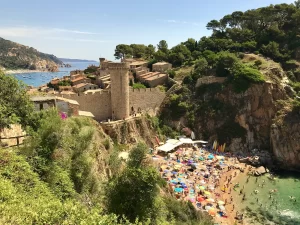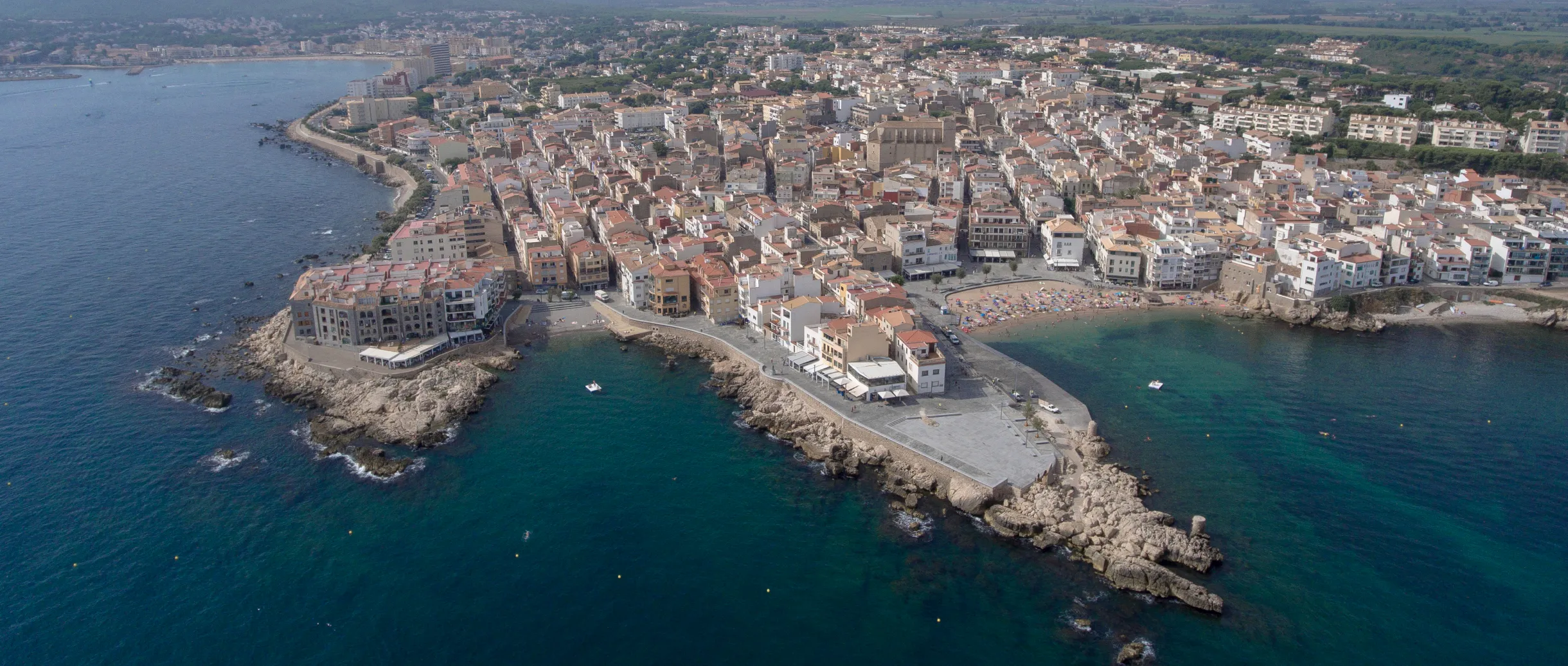
The Costa Brava is a destination full of contrasts, and few places embody its essence better than L’Escala. Located in the heart of the Empordà region, this enclave combines history, nature, and gastronomy in a privileged setting on the Mediterranean coast.
With the arrival of the 2031 Ryder Cup in Camiral, L’Escala is positioned as an excellent base for those seeking to combine high-level golf with authentic experiences on the Catalan coast.
Enjoy the beaches and coves of L’Escala
One of L’Escala’s greatest attractions is the variety of its coastline. It’s not a destination with just one beach, but rather with many different spots that allow you to choose depending on the time of day or the type of plans you have.
In the morning, areas like Platja de Riells are perfect for a leisurely stroll along the seafront, with a local atmosphere and all the amenities nearby. As the day progresses, many visitors prefer to head towards more natural spaces like Cala Montgó, a cove sheltered by mountains that creates a very special sense of refuge.
The water is usually clear and calm, ideal for a leisurely swim or simply lying back and enjoying the surroundings. It’s the kind of place where time seems to slow down.
Visitar las ruinas de Empúries
Few experiences on the Costa Brava combine history and scenery like a visit to the Empúries Ruins.
Walking among the remains of ancient Greek and Roman cities with the sea as a backdrop is something difficult to describe until you experience it. It’s not a closed museum, but an open space where you can explore ancient streets, squares, and structures while listening to the sound of the sea just a few meters away.
Furthermore, the surroundings are very well maintained, with paths that connect directly to the coast, allowing you to extend your visit with a stroll towards Sant Martí d’Empúries. It’s one of those stops that adds depth to your trip, going beyond the typical beach tourism.
Discover the anchovy tradition of L’Escala
L’Escala has a very strong identity linked to the sea, and this is especially evident in its gastronomy.
Anchovies are the star product, and it’s not just about eating them, but about understanding their tradition. In places like the Anchovy and Salt Museum, you can discover how this product has been part of local life for generations.
Afterwards, the ideal thing to do is sit down at a restaurant along the seafront and try them in their simplest form, with bread and olive oil. It’s a simple but very authentic plan that connects you directly with the essence of the place.