American dominance in the Ryder Cup between 1947 and 1979 is probably the most one-sided period in the entire history of the tournament, but it’s also the period that planted the seeds of its ultimate transformation. In the second part of this series, we covered the first six editions, interrupted by the Second World War. Now it’s time to tell how the Ryder Cup nearly disappeared, how one man saved it, and how decades of crushing American victories eventually forced a complete rethink of the tournament.
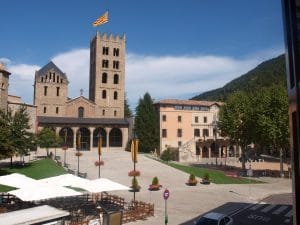
A path that, nearly a century later, will lead the Ryder Cup 2031 to Camiral, on the Costa Brava.
1947 — Portland: The Tournament a Businessman Saved from Extinction
After ten years without being played due to the war, and with Samuel Ryder now deceased, the tournament had no sponsor. The solution came from Robert Hudson, a wealthy food industry businessman from Oregon and a passionate golfer, who decided to personally fund and organise the 1947 edition in his home city of Portland.
Hudson didn’t just pay for the event: he covered the entire British team’s journey aboard the Queen Mary ocean liner, welcomed them with lavish hospitality before the match, and paid for all their accommodation and meals. Despite all this generosity, Great Britain, with only three returning players from the previous edition, suffered a crushing defeat, 11 to 1.
It marked the beginning of an American dominance that would last five decades.
1947-1955: The American Machine Gets Going
Between 1947 and 1955, the United States won every edition played, with margins ranging from comfortable to overwhelming: 11-1 in 1947, 7-5 in 1949, 9½-2½ in 1951, 6½-5½ in 1953 and 8-4 in 1955. Far from becoming more balanced, the tournament turned year after year into a demonstration of American superiority.
1957 — Lindrick: The Only British Victory in Fifty Years
In 1957, at Lindrick Golf Club, something happened that wouldn’t be repeated for decades: Great Britain beat the United States, winning 7½ to 4½. It was the only British victory between 1935 and 1983, almost fifty years of dominance interrupted by a single flash of glory.
That edition came with an unusual sponsorship story: businessman Stuart Goodwin offered the organisers £10,000, and the resulting gate receipts left the British federation with a record profit for the time.
1959-1967: Back to American Normality
After the 1957 interlude, the United States resumed its dominance with force: 8½-3½ in 1959, 14½-9½ in 1961, a resounding 23-9 in 1963, 19½-12½ in 1965, and a crushing 23½-8½ in 1967. These increasingly lopsided results began raising serious concerns about the tournament’s future as an appealing competition for spectators.
1969 — Royal Birkdale: The Tie and the Most Elegant Gesture in Golf History
The 1969 edition at Royal Birkdale ended in a tie, something that has only happened twice in the entire history of the tournament. But what made this edition truly historic was a gesture in the final hole of the final match.
With the overall result already set to end in a tie, American Jack Nicklaus conceded a putt of roughly one metre to Britain’s Tony Jacklin, a putt that, had he missed it, would have handed the United States the outright win. Nicklaus preferred to secure the tie rather than risk his opponent missing under pressure, in what has since been considered one of the most elegant acts of sportsmanship in the history of golf. American captain Sam Snead made no secret of his frustration at giving away a certain victory.
Interestingly, Nicklaus and Jacklin would go on to serve as rival captains in 1983 and 1987, and years later would even collaborate together on designing a golf course in Florida.
1971-1977: The Final Decade of the British Format
Throughout the 1970s, the United States continued to dominate almost completely: 18½-13½ in 1971, 19-13 in 1973 (the first edition with a combined Great Britain and Ireland team), 21-11 in 1975, and 12½-7½ in 1977 at Royal Lytham & St Annes. This last edition would be the final one under the Great Britain and Ireland format: never again would a British-Irish team compete for the Ryder Cup.
The overall record for this period was staggering: between 1947 and 1977, the British team had won only once. The lack of competitiveness was draining public interest in the tournament.